 Image 1 of 3
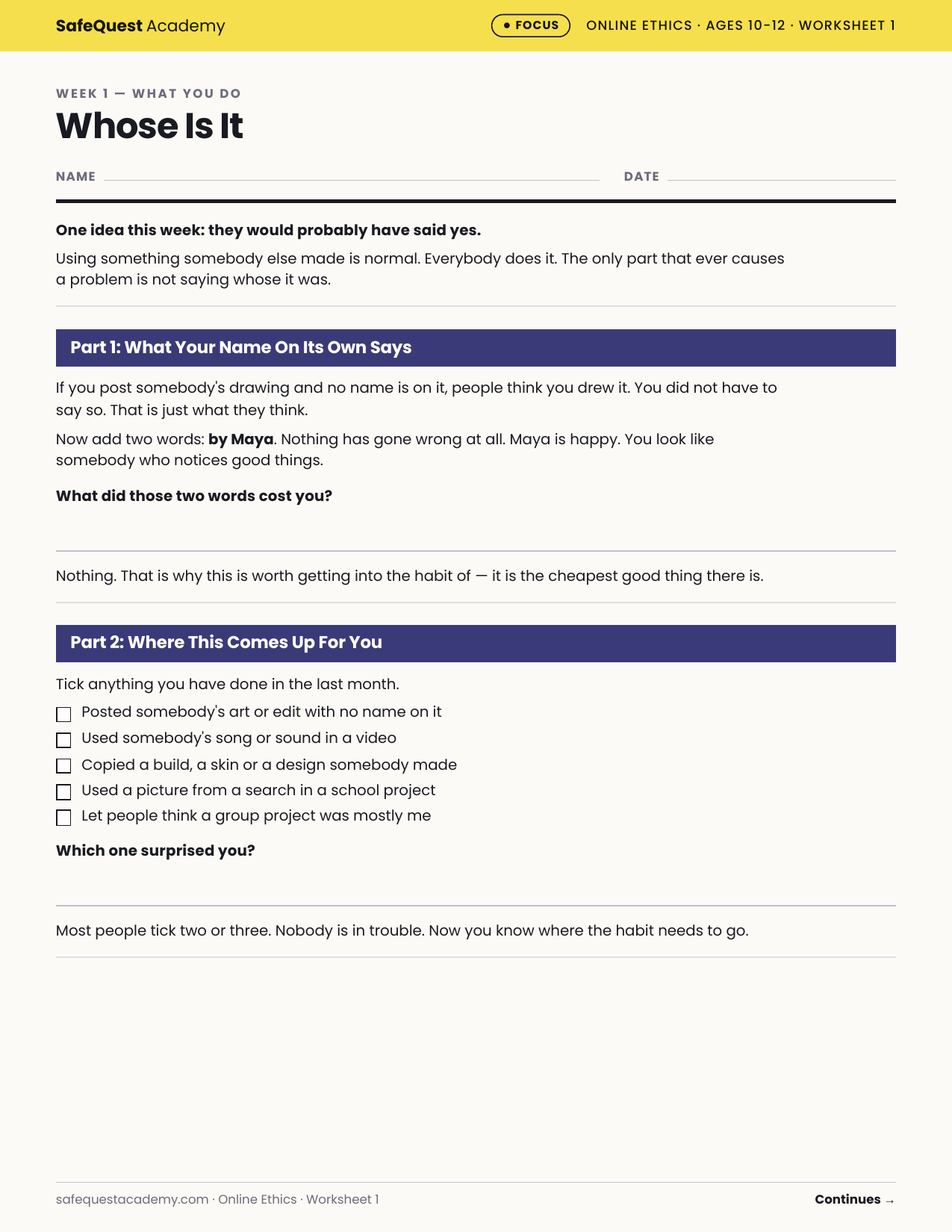 Image 2 of 3
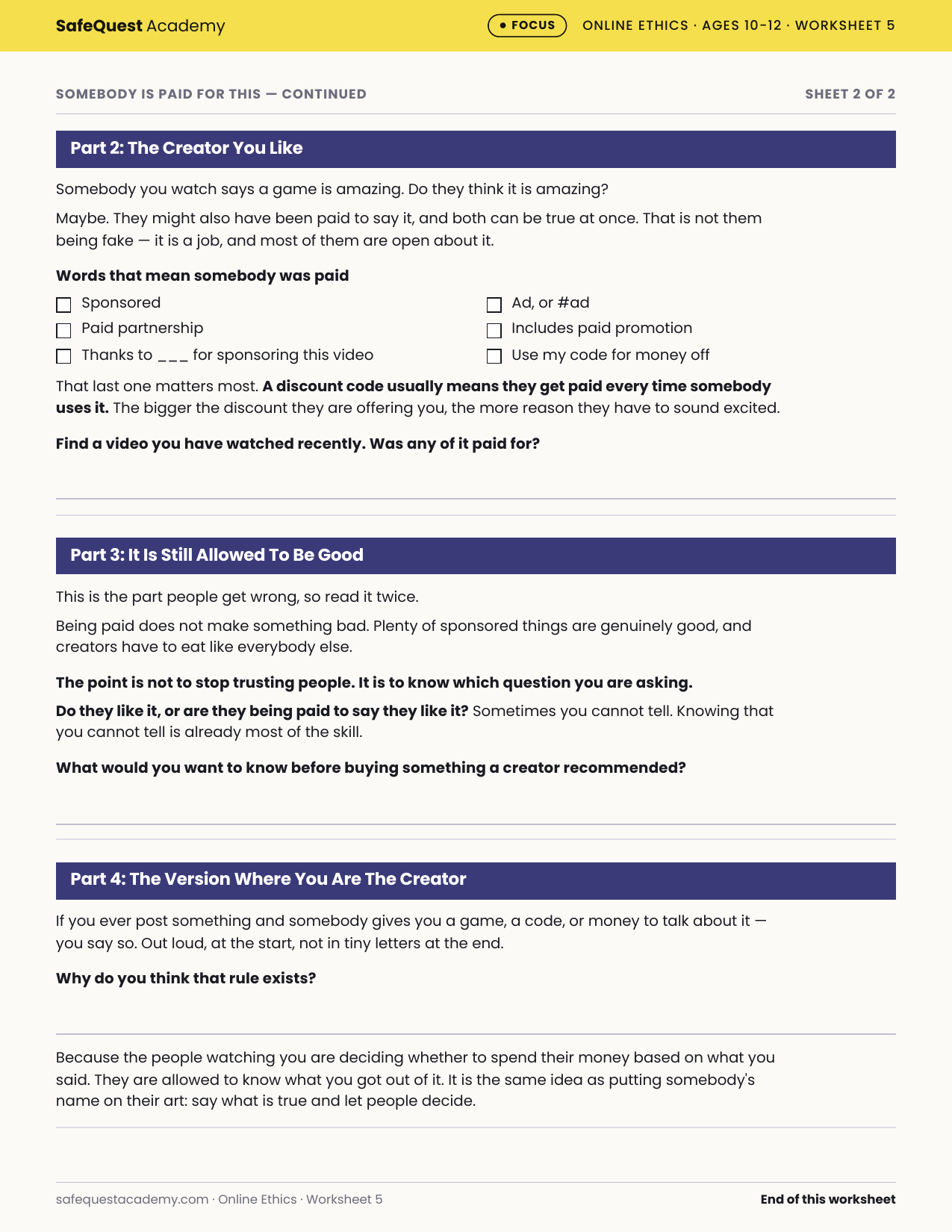 Image 3 of 3
7 worksheets, 18 pages · parent guide, 6 pages
Ten to twelve is not a smaller version of thirteen.
Three things arrive in this window, and this course is built on all three.
Around this age a child becomes able to look at a situation from a third place — not their side, not the other persons, but from outside, the way somebody watching would.
They can also hold "they didn't mean it" and "it hurt anyway" at the same time, which younger children cannot.
And what other children think of them starts to matter enormously.
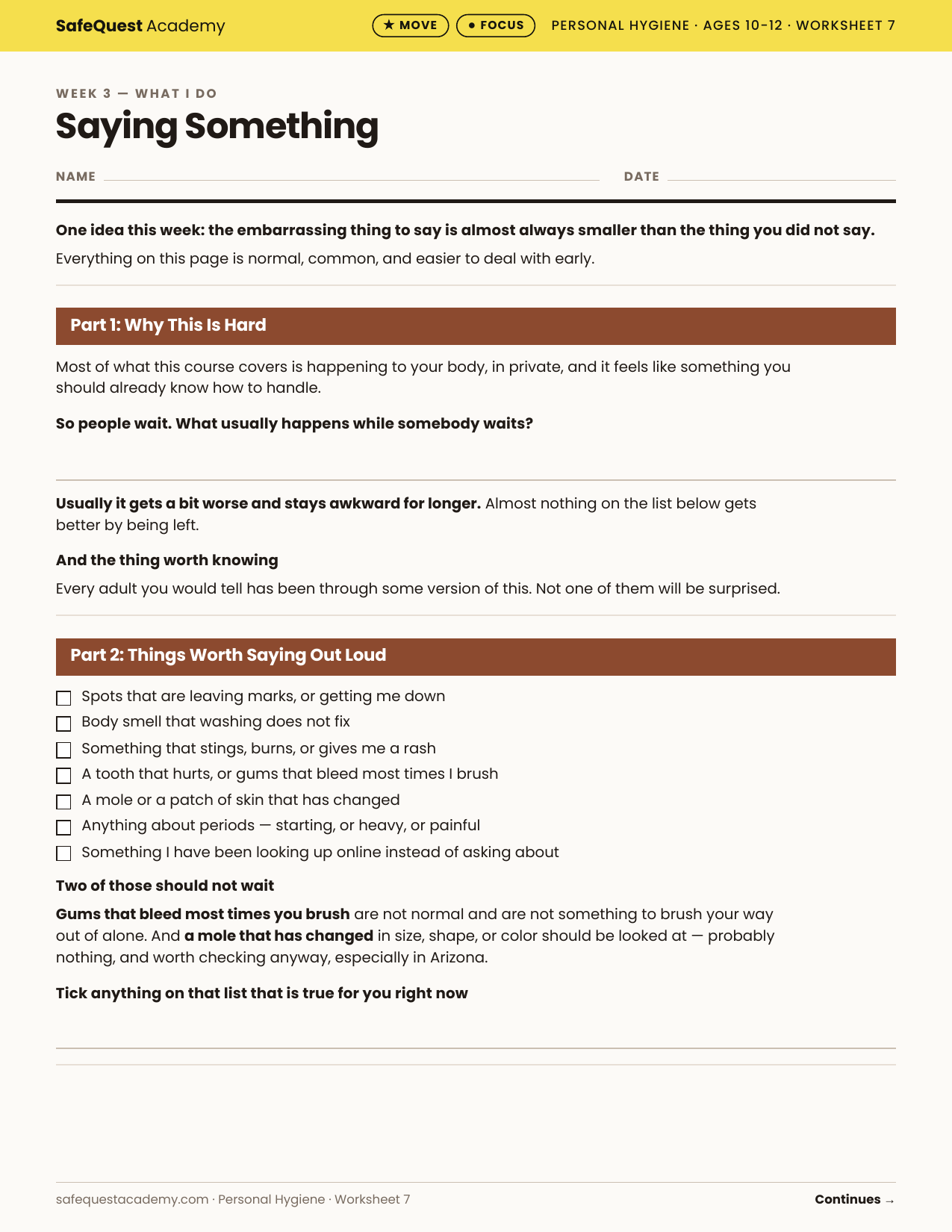
Seven worksheets across three weeks.
What's inside:
· Whose Is It — credit, and the difference between copying to practice, which is how every artist learns, and copying to post, which is when the name goes on
· Leaving Somebody Out — the sharpest thing that happens at this age and the one almost nothing covers, because it has no villain. Ask each of ten people who left somebody out and all ten honestly say "I didn't"
· When You Were The One — two things at once. The two words that undo an apology, and what one sounds like when it works
· Where Did You Hear That — one question that works on a rumor at school and on something online. And the one person nobody ever asks
· Somebody Is Paid for This — where the money in a free game comes from, what that means it needs you to do, and the words that mean a creator was paid. Careful to say that being paid does not make something bad
· Did I Learn it — on computers and homework. Not whether it's allowed: could you do the next one on your own
· What I Do — four situations that will genuinely happen, decided in advance The parent guide explains what changes at this age and why each worksheet is where it is, and has a section on what this course tends to bring up — including what to say if your child realizes they are the one who was left out.
Every file is a PDF.
Fill them in on a computer, or print them. You get both editions — full color, and a print-friendly version that uses about half the ink.
Same words, same pages. Print whichever suits the day.
Every course includes a parent guide written for that age, and a short page on how to practice the material so it is still there next year.
One purchase covers your own family. Print as many copies as you need for your own children.
Two children at the same age level? One purchase is enough.
Two children at different age levels? Each age is genuinely different material.
Using an Arizona ESA?
Place a separate order per student, so each receipt matches that child.
Prices shown are before tax. Any tax due is calculated at checkout.
7 worksheets, 18 pages · parent guide, 6 pages
Ten to twelve is not a smaller version of thirteen.
Three things arrive in this window, and this course is built on all three.
Around this age a child becomes able to look at a situation from a third place — not their side, not the other persons, but from outside, the way somebody watching would.
They can also hold "they didn't mean it" and "it hurt anyway" at the same time, which younger children cannot.
And what other children think of them starts to matter enormously.
Seven worksheets across three weeks.
What's inside:
· Whose Is It — credit, and the difference between copying to practice, which is how every artist learns, and copying to post, which is when the name goes on
· Leaving Somebody Out — the sharpest thing that happens at this age and the one almost nothing covers, because it has no villain. Ask each of ten people who left somebody out and all ten honestly say "I didn't"
· When You Were The One — two things at once. The two words that undo an apology, and what one sounds like when it works
· Where Did You Hear That — one question that works on a rumor at school and on something online. And the one person nobody ever asks
· Somebody Is Paid for This — where the money in a free game comes from, what that means it needs you to do, and the words that mean a creator was paid. Careful to say that being paid does not make something bad
· Did I Learn it — on computers and homework. Not whether it's allowed: could you do the next one on your own
· What I Do — four situations that will genuinely happen, decided in advance The parent guide explains what changes at this age and why each worksheet is where it is, and has a section on what this course tends to bring up — including what to say if your child realizes they are the one who was left out.
Every file is a PDF.
Fill them in on a computer, or print them. You get both editions — full color, and a print-friendly version that uses about half the ink.
Same words, same pages. Print whichever suits the day.
Every course includes a parent guide written for that age, and a short page on how to practice the material so it is still there next year.
One purchase covers your own family. Print as many copies as you need for your own children.
Two children at the same age level? One purchase is enough.
Two children at different age levels? Each age is genuinely different material.
Using an Arizona ESA?
Place a separate order per student, so each receipt matches that child.
Prices shown are before tax. Any tax due is calculated at checkout.