 Image 1 of 3
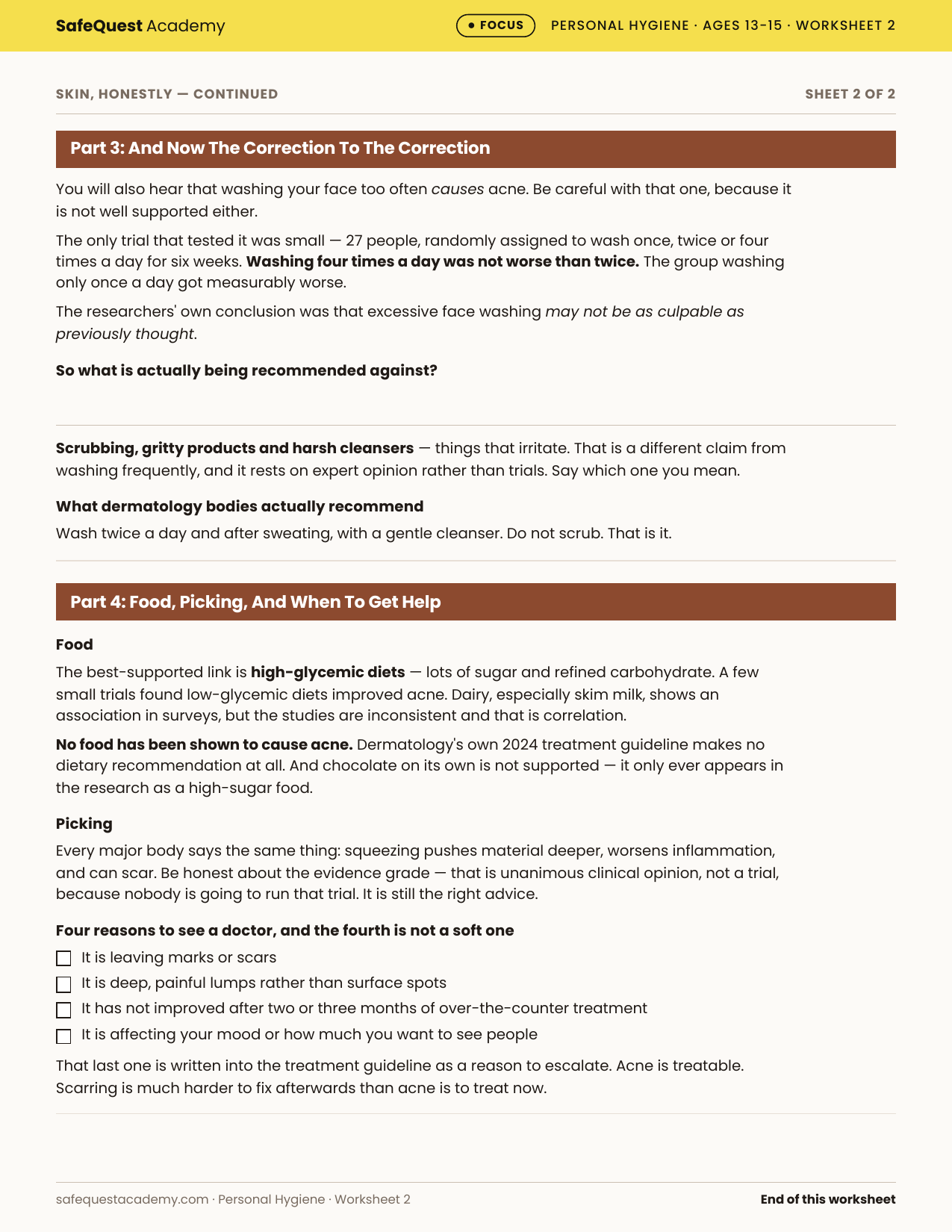 Image 2 of 3
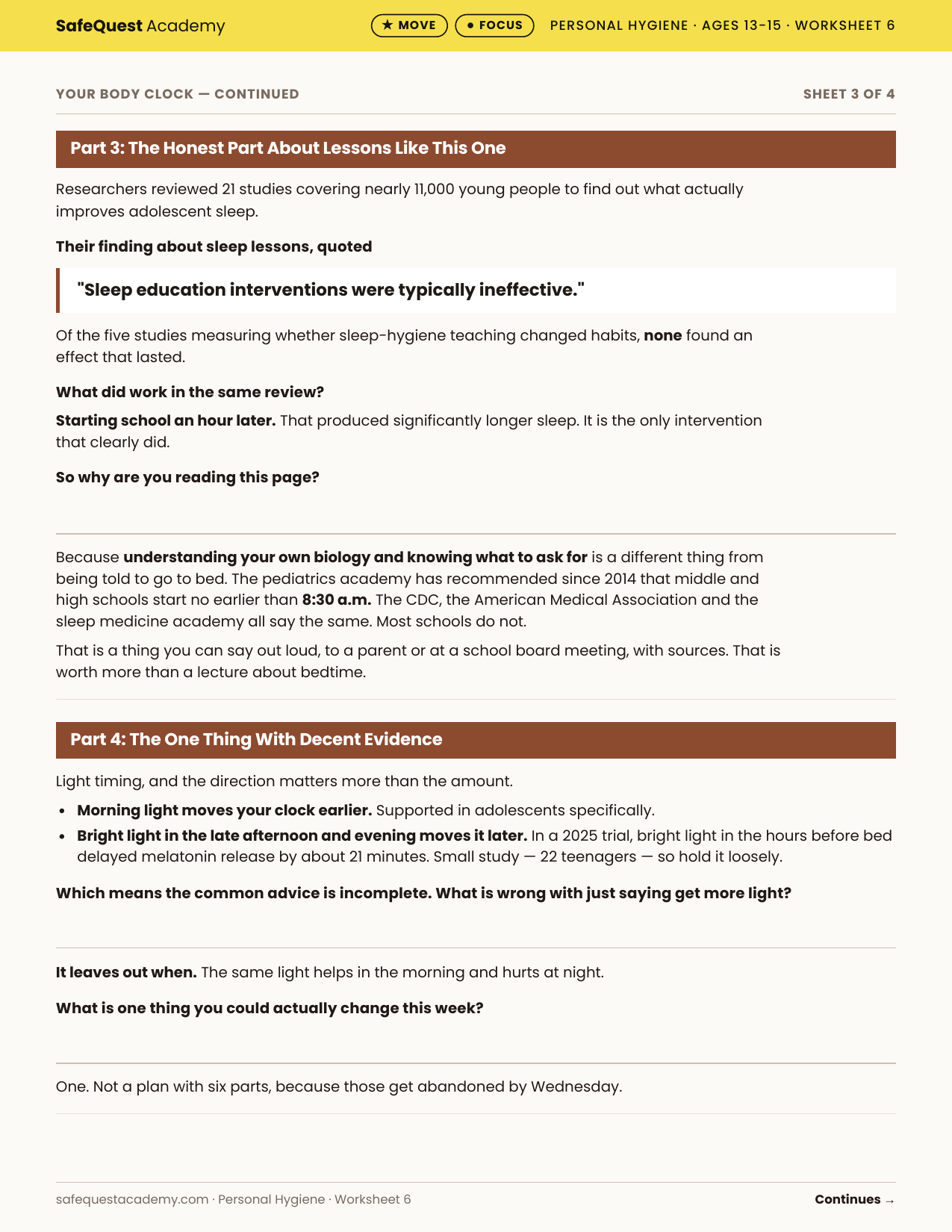 Image 3 of 3
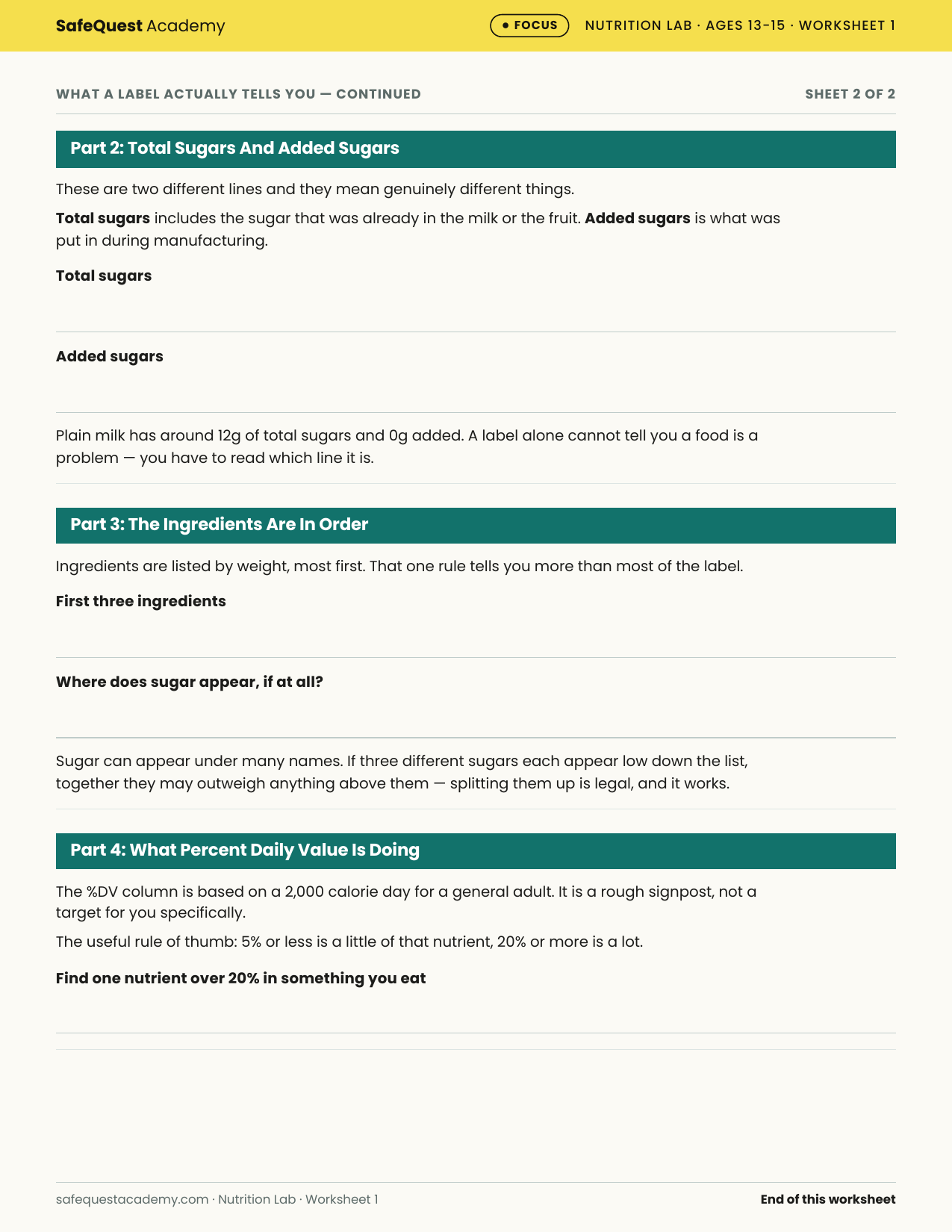
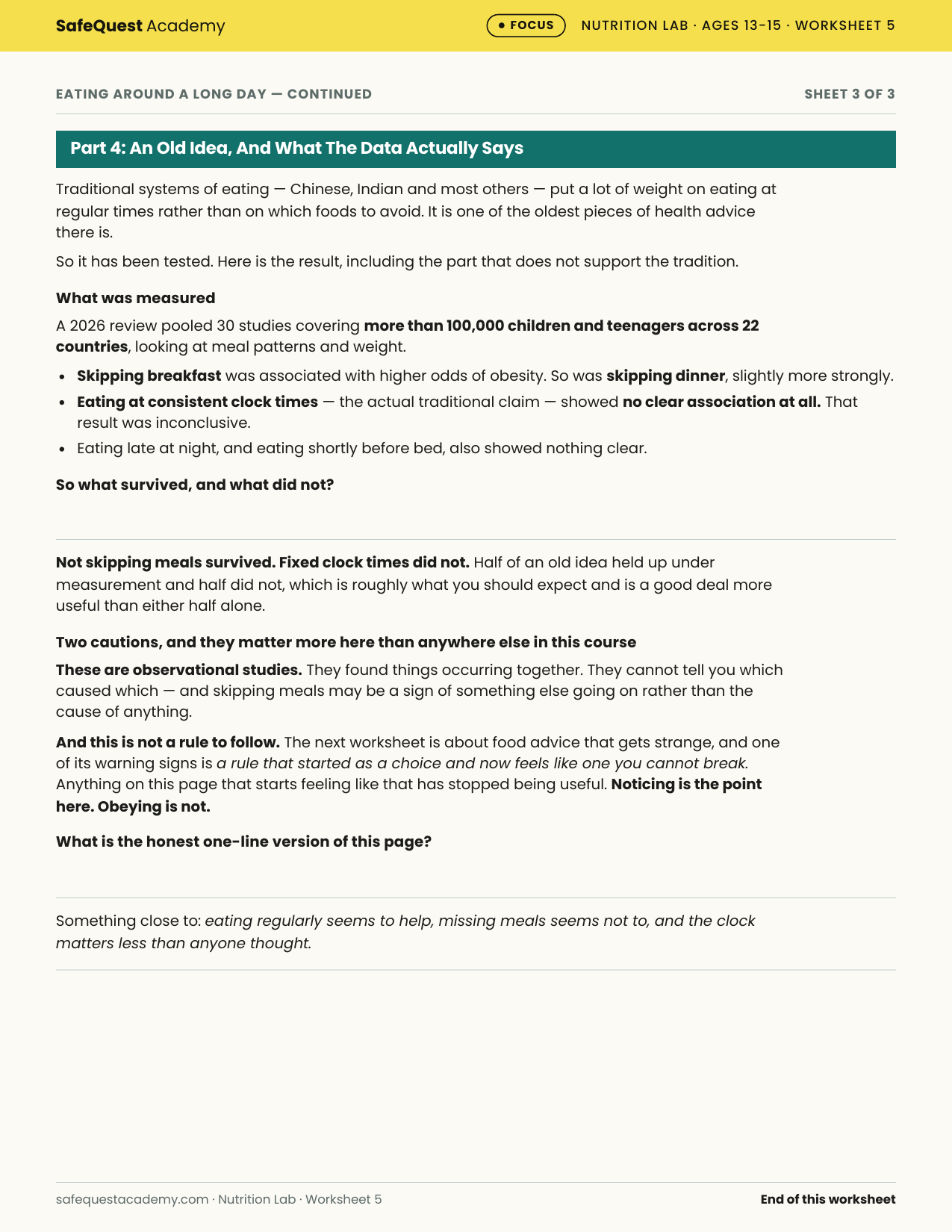
8 worksheets, 24 pages · parent guide, 7 pages
Thirteen to fifteen is when hygiene stops being something a parent supervises and becomes something a teenager owns.
It is also when they are marketed to harder than at any other age in this category.
So, this course does two things: it explains what actually changed in their body and why the routine that worked at ten stopped working — and it shows them what is being sold to them, what each ingredient is genuinely for, and how to tell a real risk from a scary-sounding one.
Eight worksheets across three weeks.
What's inside
· What Changed, And When — why body odor often starts before anything else visibly has, and the actual mechanism: what leaves the body has no smell, and skin bacteria make the smell from it
· Skin, honestly — what is happening inside a follicle, and a direct quote from the American Academy of Pediatrics that acne is not caused by dirt on the skin. Then the correction to the correction: "washing too much causes acne" is not well supported either · The Routine You Actually Need — the three steps both dermatology bodies published in 2025, what each marketed active is really for, and the FDA-approved label that states in capital letters what it does not do
· What Is Being Sold To You — a 2025 study of 100 skincare videos served to an account posing as a 13-year-old: six products, $168, eleven active ingredients in the most-viewed routines, and only a quarter including sunscreen
· How Much, And How — three questions for any harm claim, and four words for saying how sure you are, including the one people find unbearable
· Your Body Clock — why falling asleep later is physical rather than a habit, and what to actually ask for
· Periods, plainly — real numbers instead of vague warnings, the two rules that reduce risk, and concrete thresholds for when to see a doctor
· My Plan — a routine cut down to what survives a bad week Worksheet 7 is about menstruation.
It is written for anyone who has periods and is worth reading either way.
The other seven stand on their own without it.
Every file is a PDF.
Fill them in on a computer, or print them. You get both editions — full color, and a print-friendly version that uses about half the ink.
Same words, same pages. Print whichever suits the day.
Every course includes a parent guide written for that age, and a short page on how to practice the material so it is still there next year.
One purchase covers your own family. Print as many copies as you need for your own children.
Two children at the same age level? One purchase is enough.
Two children at different age levels? Each age is genuinely different material.
Using an Arizona ESA?
Place a separate order per student, so each receipt matches that child.
Prices shown are before tax. Any tax due is calculated at checkout
8 worksheets, 24 pages · parent guide, 7 pages
Thirteen to fifteen is when hygiene stops being something a parent supervises and becomes something a teenager owns.
It is also when they are marketed to harder than at any other age in this category.
So, this course does two things: it explains what actually changed in their body and why the routine that worked at ten stopped working — and it shows them what is being sold to them, what each ingredient is genuinely for, and how to tell a real risk from a scary-sounding one.
Eight worksheets across three weeks.
What's inside
· What Changed, And When — why body odor often starts before anything else visibly has, and the actual mechanism: what leaves the body has no smell, and skin bacteria make the smell from it
· Skin, honestly — what is happening inside a follicle, and a direct quote from the American Academy of Pediatrics that acne is not caused by dirt on the skin. Then the correction to the correction: "washing too much causes acne" is not well supported either · The Routine You Actually Need — the three steps both dermatology bodies published in 2025, what each marketed active is really for, and the FDA-approved label that states in capital letters what it does not do
· What Is Being Sold To You — a 2025 study of 100 skincare videos served to an account posing as a 13-year-old: six products, $168, eleven active ingredients in the most-viewed routines, and only a quarter including sunscreen
· How Much, And How — three questions for any harm claim, and four words for saying how sure you are, including the one people find unbearable
· Your Body Clock — why falling asleep later is physical rather than a habit, and what to actually ask for
· Periods, plainly — real numbers instead of vague warnings, the two rules that reduce risk, and concrete thresholds for when to see a doctor
· My Plan — a routine cut down to what survives a bad week Worksheet 7 is about menstruation.
It is written for anyone who has periods and is worth reading either way.
The other seven stand on their own without it.
Every file is a PDF.
Fill them in on a computer, or print them. You get both editions — full color, and a print-friendly version that uses about half the ink.
Same words, same pages. Print whichever suits the day.
Every course includes a parent guide written for that age, and a short page on how to practice the material so it is still there next year.
One purchase covers your own family. Print as many copies as you need for your own children.
Two children at the same age level? One purchase is enough.
Two children at different age levels? Each age is genuinely different material.
Using an Arizona ESA?
Place a separate order per student, so each receipt matches that child.
Prices shown are before tax. Any tax due is calculated at checkout